
By Haleema Ltd.
May 15, 2026
One of the five pillars of Islam - the Hajj is one of the largest annual religious events in the world, with Muslims from around the globe flocking to the Kingdom of Saudi Arabia to undertake the pilgrimage each year. This is a huge spiritual gathering that demands extra-ordinary planning, co-ordination, infrastructure and security management.
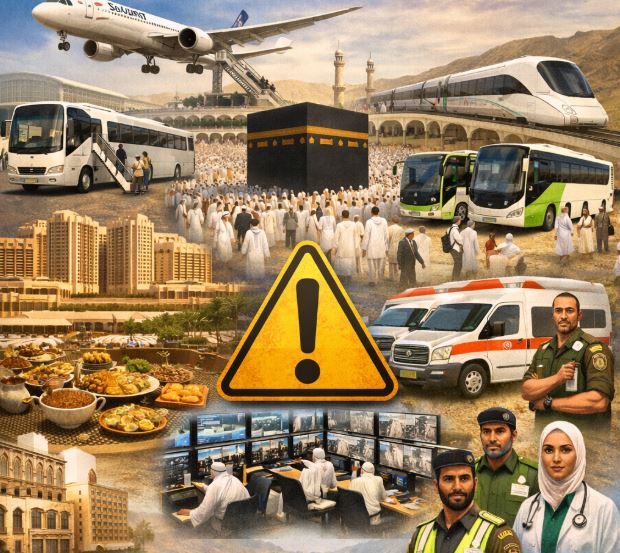
The Saudi Arabian government has made significant and comprehensive preparations for administrative, technological, logistical, health and security protocols for the Hajj 2027 (1448 AH) this year - to ensure that over two million pilgrims attending will have a safe, smooth and spiritually fulfilling experience for the entire journey. Overall, the preparations highlight Saudi Arabia's dedication to making Hajj a smarter, safer and more efficient experience - through the integration of digital tools, modern infrastructure, crowd management systems and advanced health protocols’
The Ministry of Hajj and Umrah has finalized comprehensive operational plans that include digital services, transport, accommodation regulation, heat management, emergency response systems and rigorous permit enforcement, among other considerations, alongside several Saudi authorities and over 40 government agencies. These are all aligned to Saudi Vision 2030 - the goal of which is to improve the quality of services offered to pilgrims visiting the Two Holy Mosques.
This article looks at the key arrangements for the main Hajj season for 2027 in detail. Read also for Hajj Caution
The digital transformation and smart Hajj services
The biggest change in recent times has been the digitization of Hajj services. Saudi Arabia is still making extensive use of smart technologies in 2026 to enhance the operations of Hajj and minimize the amount of paperwork involved in the pilgrimage.
Nusuk Platform - the unified hajj gateway
The Saudi government has chosen the Nusuk Hajj Platform as an official digital platform for the registration, booking of packages, visa processing and providing services for the pilgrims of the Hajj. The platform is under the supervision of the Ministry of Hajj and Umrah directly and is the main entry point for pilgrims both within and outside the country.
On the Nusuk platform pilgrims can:
- Register for Hajj
- Verify eligibility
- Select authorized packages
- Make digital payments
- Travel-and-accommodation information is available
- Get permits, service information
- Get immediate alerts and instructions
Saudi authorities have made it clear that only licensed operators, who are on the Nusuk system, are permitted to conduct family Hajj services. This measure is intended to eliminate fraudulent agencies and operators who are not authorized.
Digital Hajj Cards
Smart digital Hajj cards for travelers will continue to be used in Saudi Arabia. These cards have the pilgrims' personal details, room information, travel arrangements and medical information. The digital cards would assist authorities to locate pilgrims easily and access different services and places of worship.
The project provides a significant enhancement to movement of the crowds, decreases administration delays and increases security monitoring during the peak days of Hajj.
Strict Hajj Permit Enforcement
Saudi Arabia has announced tougher measures’ for Hajj permits and illegal entry into Makkah for Hajj 2026. Clearly, the Ministry of Interior has announced that entry to Makkah will be allowed only for:
- Official Hajj visa holders
- Authorized residents who hold a permit
- Approved workers for the Hajj season
- Anyone who tries to enter Makkah without having a Hajj permit will be subject to serious consequences such as:
- The penalties could be as high as SAR 100,000
- Deportation for expatriates
Imprisonment
Violators of transportation laws may be taken into custody for transportation.
The authorities’ also stopped unauthorised access to the Umrah process during the key operational periods of Hajj so as to prevent overcrowding and keep the situation under control in terms of security.
These measures are aimed at stopping illegal pilgrim movements’, lowering the numbers of pilgrims and securing the safety of the officially registered pilgrims.
Improving Transportation and Infrastructure
One of the biggest operational challenges in the performance of Hajj is to manage the transportation of millions of pilgrims within a very small geographical region. To overcome this - Saudi Arabia has made extensive improvements in transportation systems and infrastructure.
Mashair Metro System Al Mashaaer Al Mugaddassah Metro is one of the major means of transportation between the holy sites’ of:
- Mina
- Arafat
- Muzdalifah
The metro system will be used to transport hundreds of thousands of pilgrims efficiently during the most important ritual days and minimizing traffic congestion and heat exposure.
Air-Conditioned Bus Networks
Saudi powers have also upgraded the modern air-conditioned buses fleet between Makkah and the holy places. The buses are synchronised with the digital scheduling systems to facilitate pilgrims' movement and minimize waiting time.
Special routes’ and operational plans are developed to enhance traffic flow and access in case of emergencies.
Expansion of Roads and Pedestrian Facilities
Further improvements are still in progress for the Kingdom:
- Roads and tunnels
- Pedestrian walkways
- Cooling systems
- Shaded areas
- Rest stations This is important in view of the increasing temperature in summer during the Hajj seasons.
The “Road to Makkah” Initiative
Saudi Arabia's Road to Makkah Initiative is one of the most successful programs that facilitate the Hajj. In this program, pilgrims who are picked from certain countries undergo immigration, customs and health clearance at their home airports prior to their travel to Saudi Arabia. Once they enter, pilgrims are treated like domestic passengers and the airport congestion and processing delays are greatly reduced.
The programme has the following advantages:
- Faster airport clearance
- Reduced waiting times
- Improved luggage handling
- Better pilgrim comfort
- Enhanced operational efficiency
Pakistan remains one of the big beneficiaries among the participating countries under this initiative.
Health and Medical arrangements
With recent global health risks and extreme weather, Health safety is always a key concern in Saudi Arabia.
Mandatory Vaccinations
The Saudi government has declared a number of vaccinations to be mandatory for pilgrims going on the haji - these include:
- Meningococcal Meningitis (ACWY)
- COVID-19 vaccinations’
- Influenza vaccines in some instances
Vaccination certificates are verified on entry and at the visa application process. Individual pilgrims who do not comply with the health standards will not be allowed to travel or enter.
Heat Management Measures
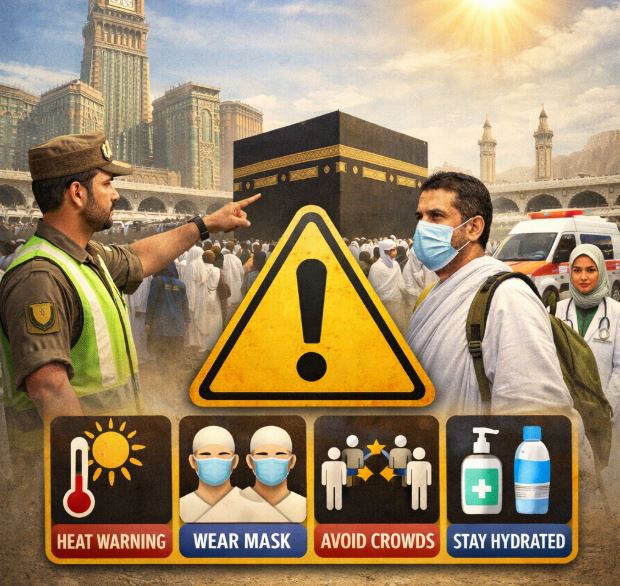
To ensure everything goes smoothly for the pilgrims during Hajj 2027 - which is expected to take place in extreme heat conditions - the Saudi authorities have implemented many measures to reduce heat, such as:
- Air-conditioned tents
- Cooling stations
- Water mist systems
- Increased shaded walkways
- Distribution of cold drinking water
- Heatstroke prevention presentations to the public.
- Pilgrims’ are always reminded to:
- Stay hydrated
- Limit exposure to the sun.
- Use umbrellas
- Follow medical guidance
Medical Services and Emergency Response
Thousands of healthcare workers, ambulances, emergency teams and mobile clinics will be deployed throughout the:
- Makkah
- Madinah
- Mina
- Arafat
- Muzdalifah
Also, advanced emergency response systems and complaint management centres have been activated to respond to: Missing pilgrims
- Lost luggage
- Medical emergencies’
- Heat exhaustion cases
- Crowd-related incidents
The Saudi Food and Drug Authority (SFDA) has also undertaken the food safety inspections and medical supply monitoring during the entire season of the Hajj.
Hajj Quotas and Country Allocations
Saudi Arabia sets aside the number of participants for each country according to the ratio of Muslims in the population and the agreements made with the country.
It is reported that Pakistan has got a quota of around 179,210 pilgrims for Hajj 2027 and a considerable number of them are allotted to the government Hajj scheme.
Saudi government and the countries involved remain closely coordinating to allow for the transparent allocation, visa issuance and the operational management.
Age restrictions or eligibility requirements
In order to ensure safety of crowds and to address operational issues - Saudi Arabia has continued to have restrictions on participation in the Hajj based on age.
For Hajj 2027:
- Children below 12 years old are not allowed to make Hajj
- First time pilgrims are often given priority
- The health fitness requirements continue to be required.
There was a brief discussion about increasing the minimum age further - but it was later decided to keep the minimum age at 12 years.
The policies are intended to assure a safer way to move about in the crowded areas of a pilgrimage and to minimize risk to vulnerable groups.
Accommodation and Housing Regulations
There has been an increasing level of regulation in order to ensure the safety and quality of pilgrim services in the accommodation management process.
- Saudi authorities are very strict with:
- Tasreeh (housing permits)
- There are a number of accommodation classification systems that are available for use, such as Tasneef.
During the time of Hajj, only those hotels are permitted to accommodate the pilgrims which are licensed and approved as safety ones. Authorities inspects to ensure compliance with:
- Fire safety standards
- Capacity regulations
- Hygiene requirements
- Transportation accessibility
The purpose of the rules is to eliminate overcrowded and unauthorised accommodation facilities.
Implementing crowd management and security operations
One of the most important issues that need focus during the planning of Hajj is the crowd management. Saudi authorities have finalised final operational plans for:
- The Grand Mosque (Masjid al-Haram)
- Jamarat Bridge
- Tawaf areas
- Sa’i corridors
- Mina camps
Efforts are being made to track the movement of pilgrims’ and avoid dangerous crowding by implementing advanced technologies, surveillance systems, AI (artificial intelligence) monitoring tools and real-time analysis of the crowd.
Thousands of security, volunteers’ and emergency teams will be deployed all over the holy places to lead the pilgrims and be quick to respond in case of incidents.
Saudi Arabia's Vision for an “Intelligent Hajj”
These plans for the Hajj 2026 highlight Saudi Arabia's commitment to an “Intelligent Hajj” experience - which relies on:
- Artificial intelligence
- Digital platforms
- Smart transportation systems
- Data-driven crowd management
- Integrated health monitoring
- Automated permit verification
The Kingdom is still investing heavily in technology and infrastructure to provide greater comfort, safety and operational efficiencies for pilgrims - while maintaining the spirit of Hajj.
Conclusion
Hajj 2026 represents’ another milestone in the continuous progress of Saudi Arabia in modernizing and enhancing the pilgrimage experience for the millions of Muslims around the globe. The Kingdom's aim is to give pilgrims a safer, smoother and more spiritually enriching experience through advanced digital systems, stricter permit enforcement, improved transportation networks, comprehensive health measures’ and sophisticated crowd management strategies.
This is achieved by incorporating smart technologies through the Nusuk platform - enhancing emergency protocols and expanding infrastructure to meet the professional and excellent management of one of the world's largest religious gatherings.
While preparations are underway - pilgrims are urged to adhere to official guidelines, utilize authorized platforms and operators, fulfill all health protocols’ and ensure compliance with Saudi regulations for a safe and enriching Hajj experience.
Pilgrims are advised to always check the official Saudi government websites and registered Hajj operators for official updates and registration.